By Hedaya Shamun
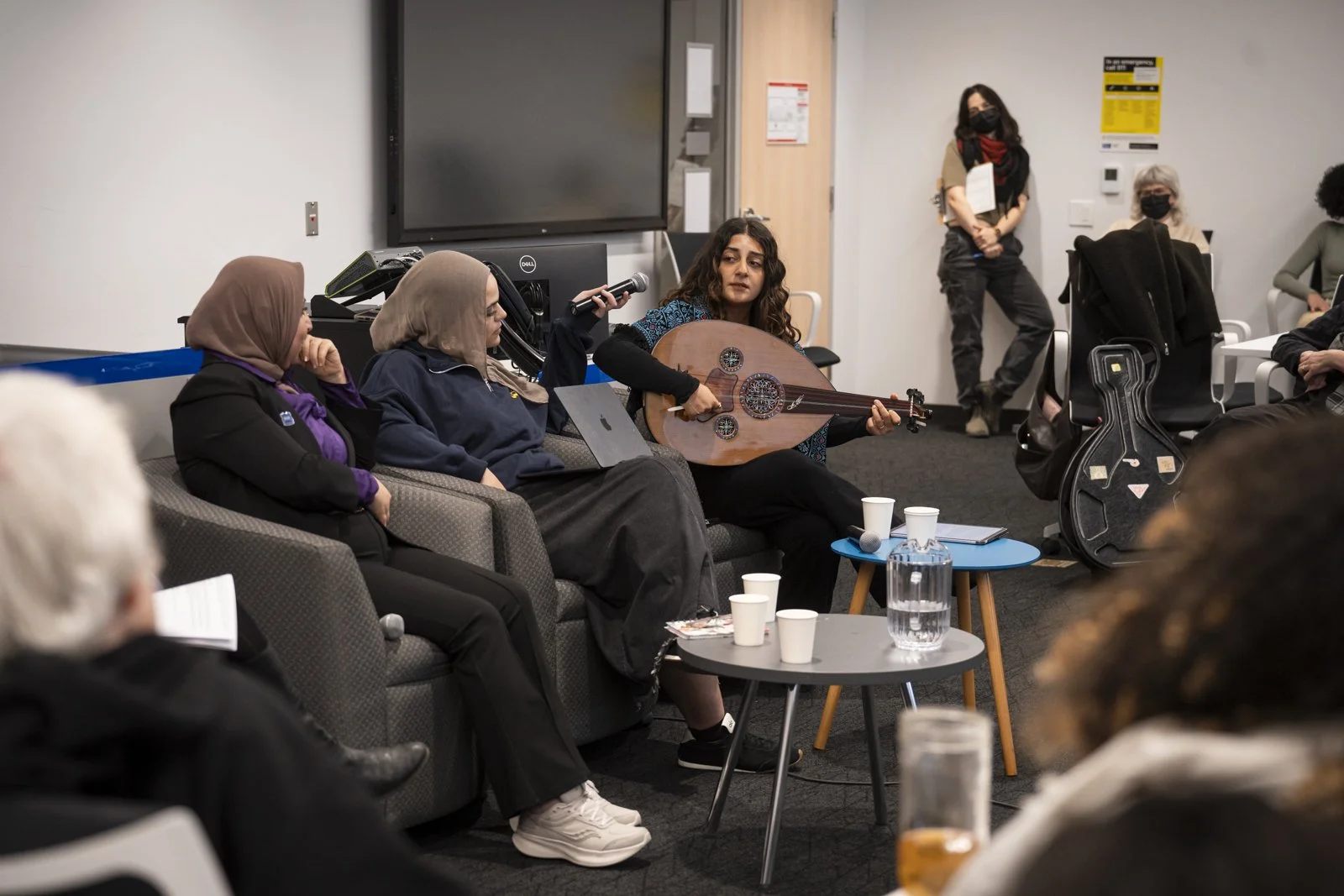
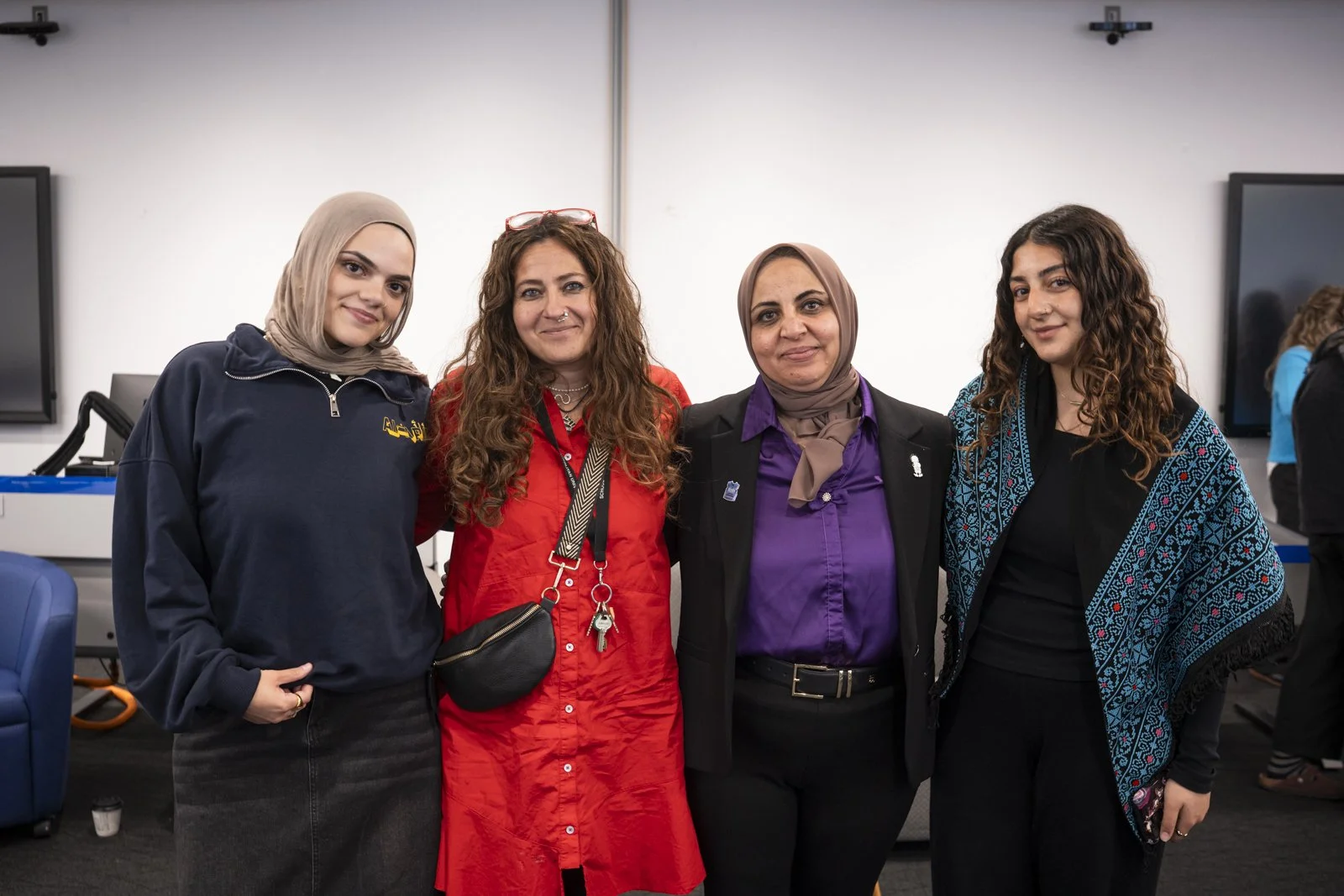
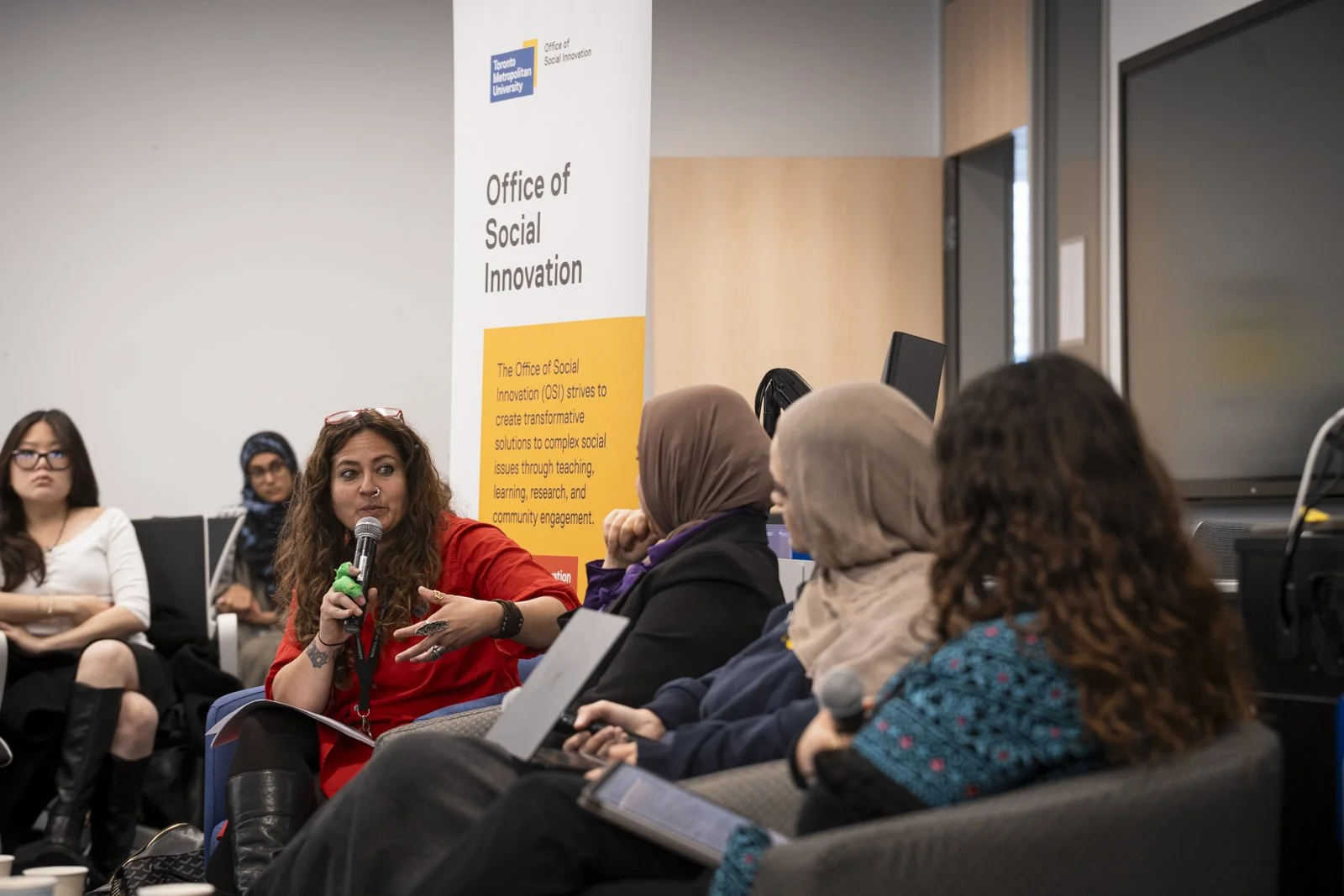
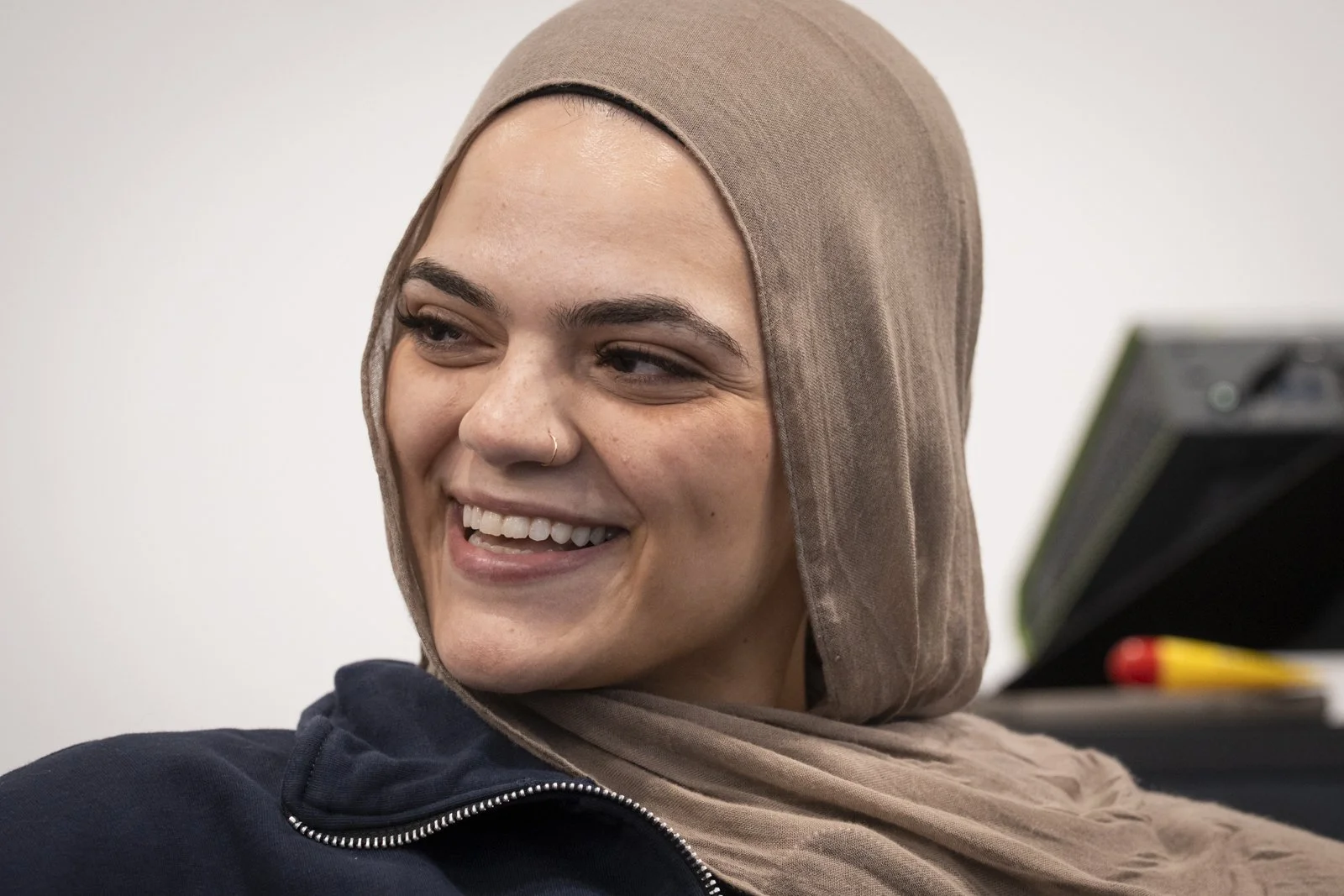
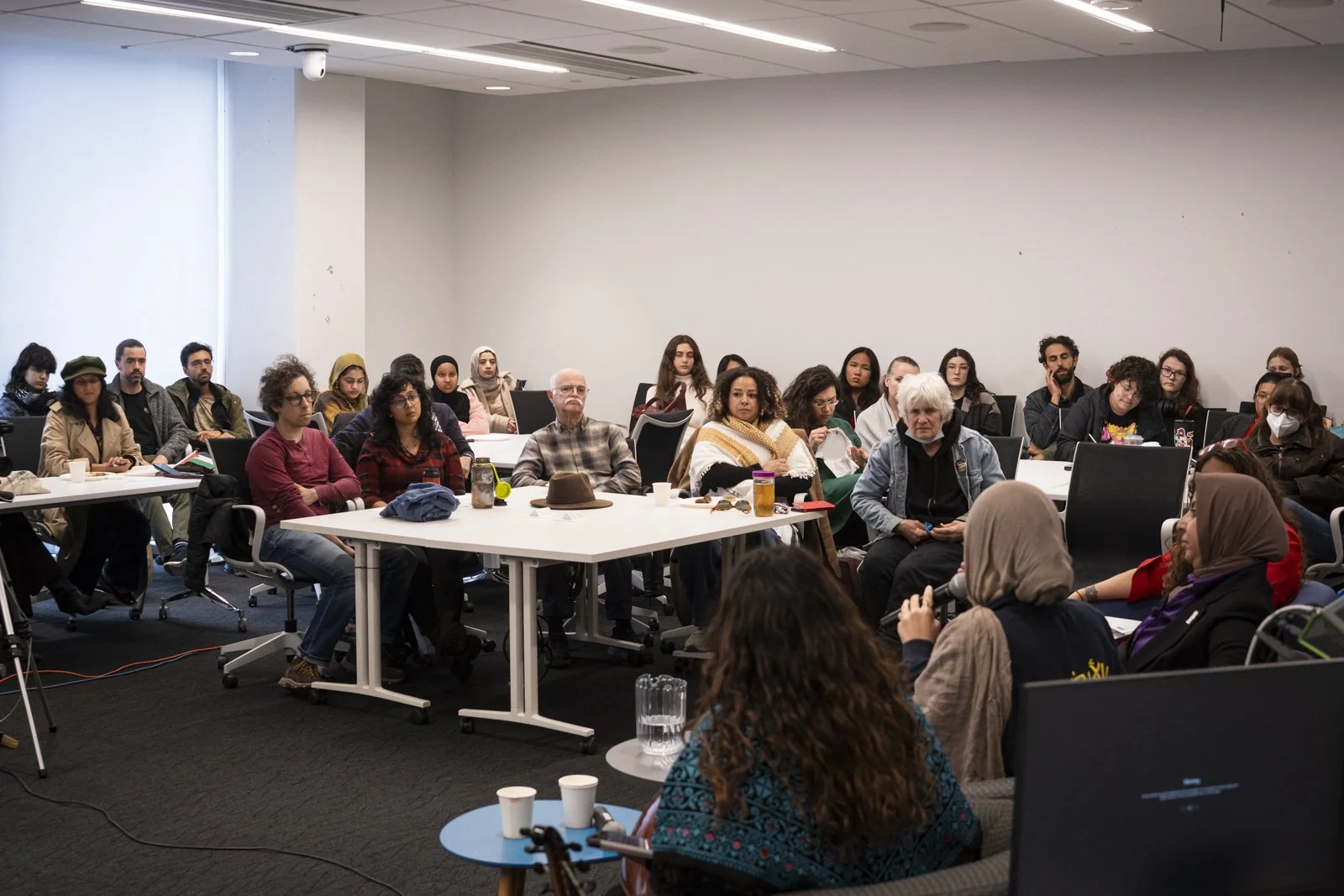
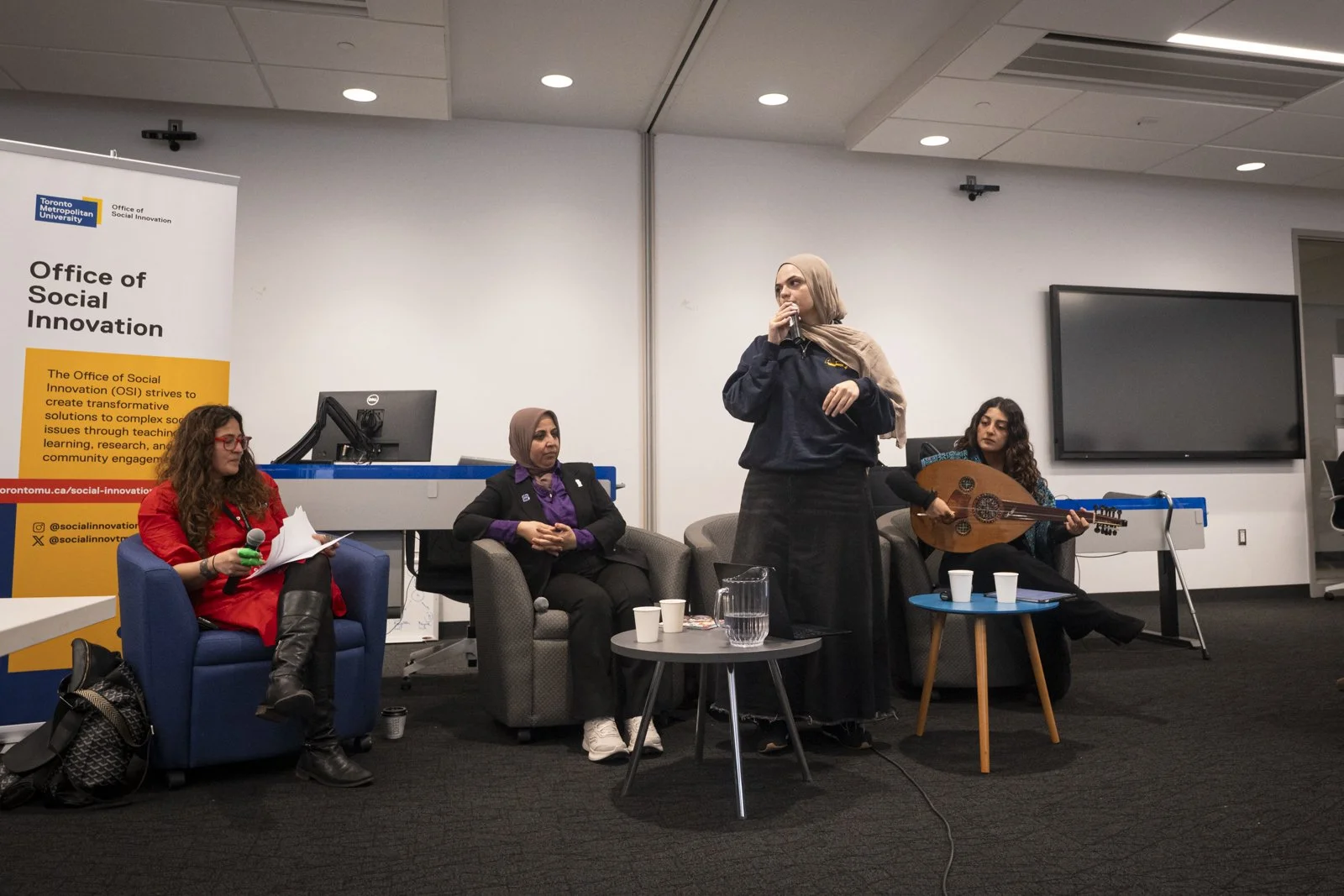
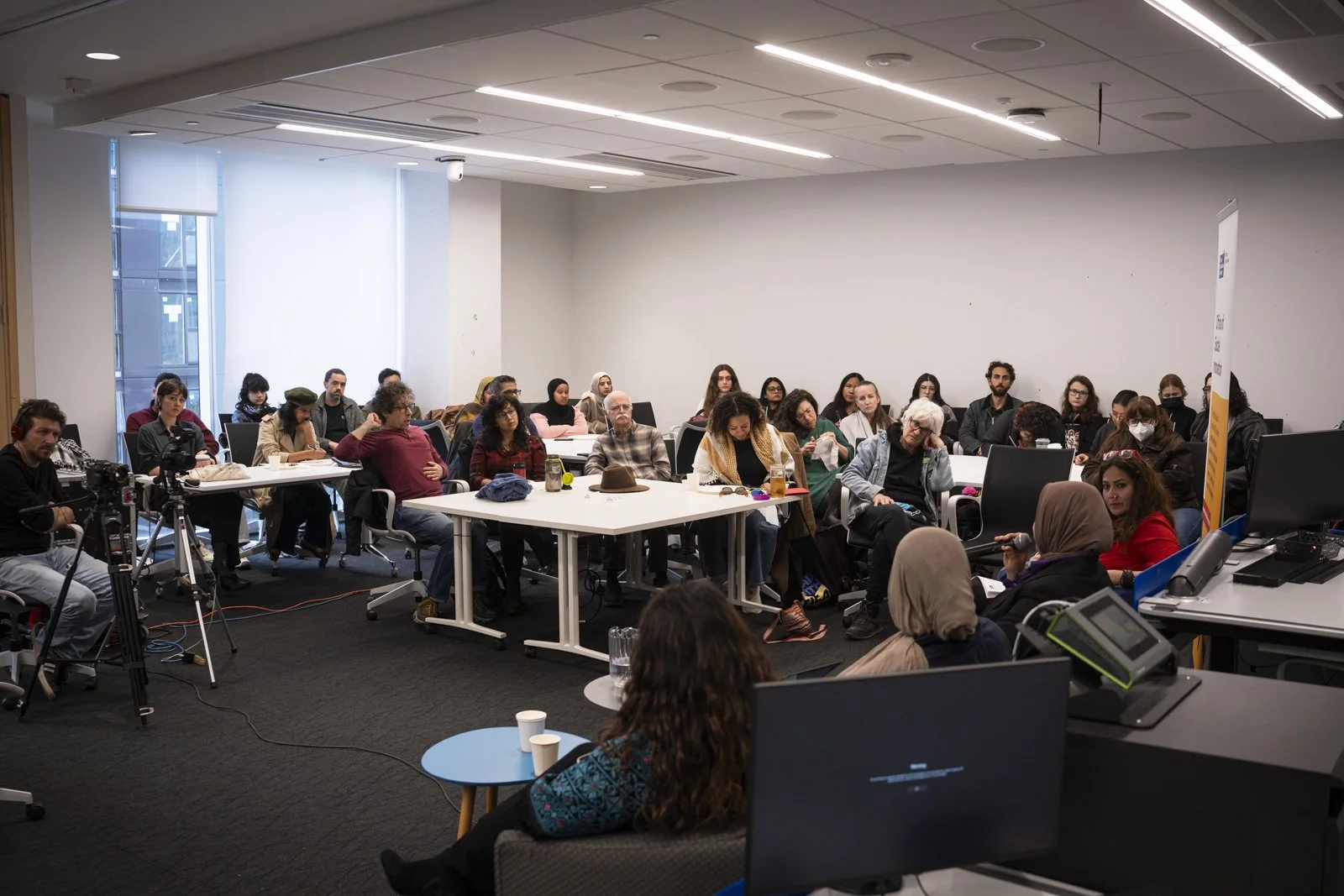
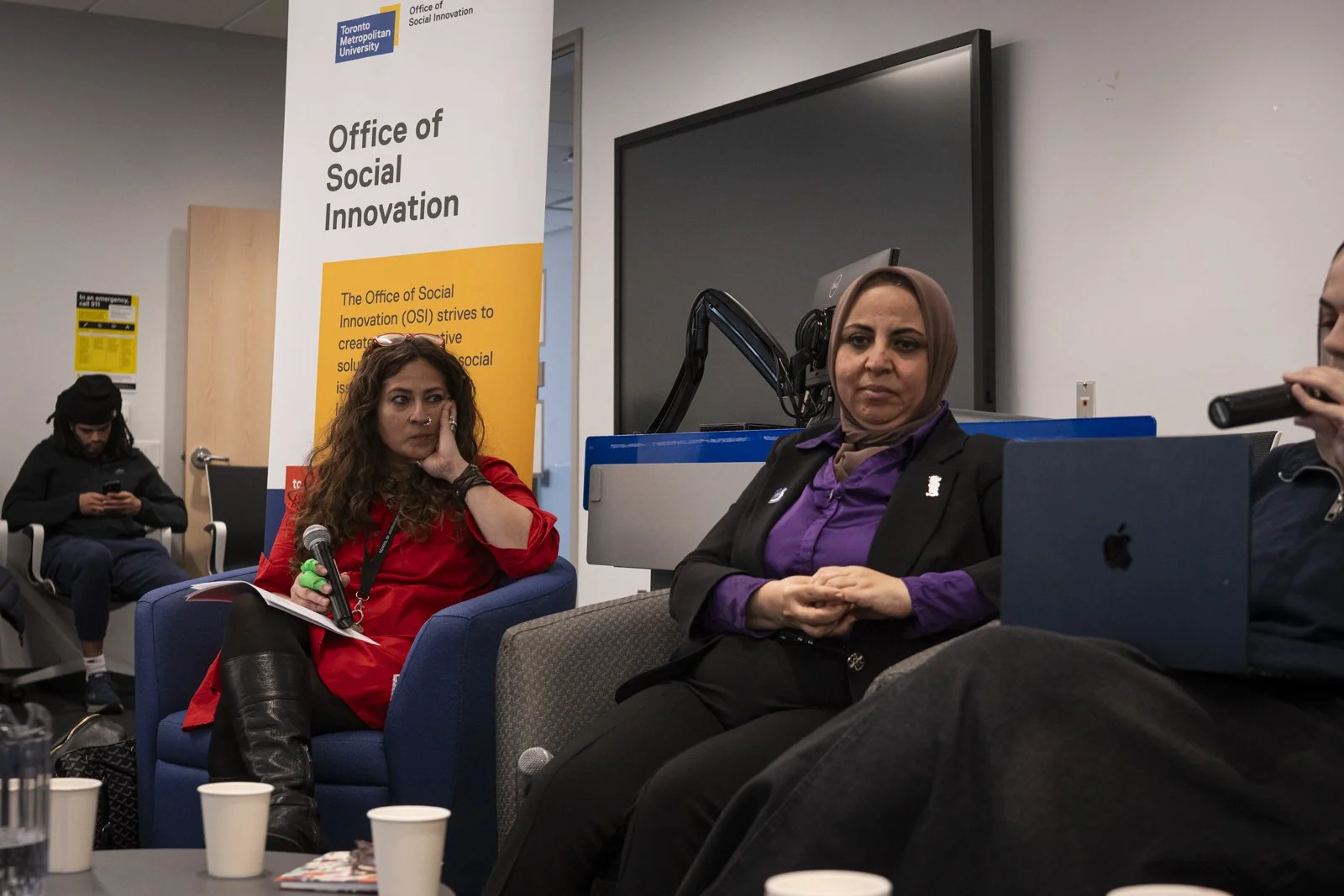
On Monday, November 9, 2026, Toronto Metropolitan University (TMU) hosted a panel discussion titled “Journalism as Solidarity: Documenting Life and Death in Gaza”, as part of Voices of Solidarity: Palestinian Stories, Music and Scholarship on Turtle Island, a four-part Free School series organized by the university’s Office of Social Innovation, in collaboration with the Voices of Palestine project and made possible in part by The Muslim Fund. The panel was facilitated by Sonya Fatah, Director of Living with Drones, and featured Hedaya Shamun, a Palestinian writer, journalist, and researcher from Gaza, alongside Laila Hashem and Mariam Shakka, two Palestinian performers from Living with Drones. The conversation explored the panelists’ experiences documenting the stories of Palestinians in Gaza and examined the role and responsibilities of journalism during a time of genocide. The event was opened by Dr. Eliza Chandler, Executive Director of the Office of Social Innovation and Associate Professor in the School of Disability Studies at Toronto Metropolitan University.

Photo by Palestinian photographer, Fadi A Thabet, taken in northern Gaza in 2017
A Song, a sister, and the Stories We Carry
It was the first panel discussion I had taken part in Canada, in Toronto, where I had moved only two months earlier. The room was filled with curious, encouraging, and supportive faces. I could see Palestinian keffiyehs around me, and small pins bearing the word “PRESS” on the chests of some attendees. These pins were a symbol of solidarity with all the journalists killed in Palestine and Gaza, a reminder of their lives and a call for accountability and justice.
The wonderful smell of Palestinian food drifted in from the adjoining room, making me feel that I was somewhere familiar, somewhere that resembled my country and my city. The atmosphere was filled with solidarity and a warm, heartfelt welcome. Eliza's inspiring opening remarks spoke of the power of solidarity and knowledge as she welcomed everyone. I felt that I was in a safe place, surrounded by solidarity, a place that felt close to my heart because of its sincerity and beautiful simplicity.
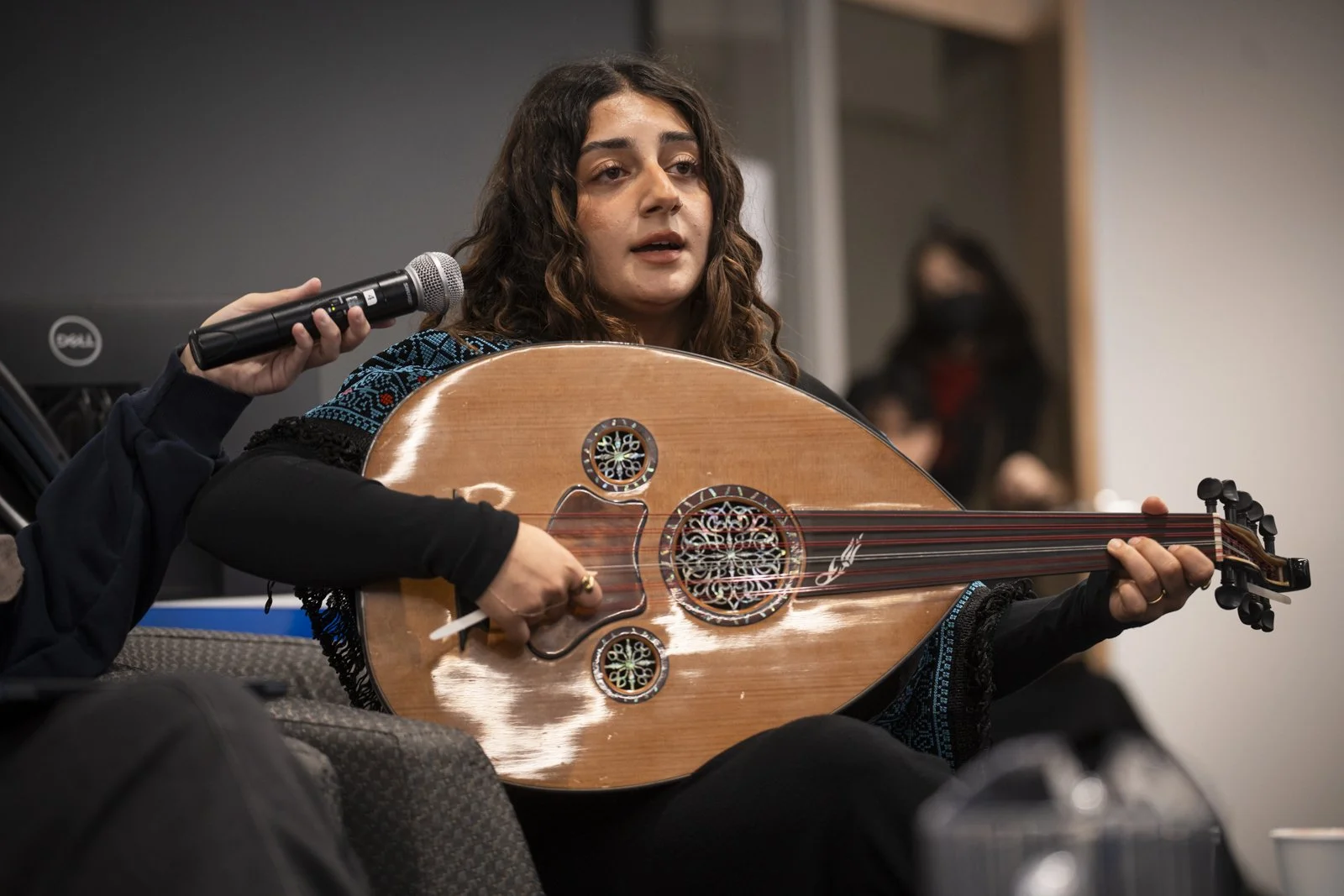
Sonya's facilitation was spontaneous and creative. She introduced each participant through the personal connections and human moments that had brought them into her life, beginning with Laila, then Mariam, and finally me. Through the way Sonya introduced them, I felt as though I had known Laila and Mariam for a very long time, as if they were old friends we had not seen for years. It was the first time in three years that I had listened to Fairuz. Mariam played the oud and sang one of Fairuz's songs. I had stopped listening to Fairuz three years ago because her voice reminded me of those early morning hours at work in Gaza, or the first hours of the morning in my home in Rafah.
The genocide had begun, and I could no longer listen to Fairuz or to any music. What we had lived through during the genocide, displacement, and loss had turned our lives completely upside down. We were no longer a family as we had once been. We were no longer in our home, our city, or our workplaces. Our neighbors were no longer where they used to be, and our colleagues were no longer together. Everyone had been scattered. We could no longer recognize ourselves after experiencing so much pain and loss.
Yet, despite all of this, I listened to the song. I felt an overwhelming longing for those beautiful days, for those mornings when I was full of energy and ready for work, or simply ready to begin a new day. For a moment, I felt a little hope that we might sing again one day, that we might begin to gather the pieces of our wounds and pain through music, solidarity, and storytelling.
When I began speaking, it was the first time I had talked publicly about my sister Khadija, whom I lost during the genocide. She was killed when Israeli occupation forces bombed her neighbors' house. The enormous explosion sent dozens of pieces of shrapnel into her body, killing her as she lay in her bed in her bedroom after midnight in 3 March 2024. She was left lying in her own blood. She had lived through five months of genocide, gathering her sons, daughters, and grandchildren around her in her home in Deir al-Balah, even though she had not yet turned 55. I had written about her, but writing never felt enough to quiet the pain in my soul. I shared only a little of her story during the panel, not because I did not want to talk about her. Quite the opposite. It was the first time I felt that I truly wanted to speak about her. But I wanted people to know more about her life than the moments of her killing.
I wanted the audience to hear her beautiful, gentle voice, which I miss so much. I wanted them to know the warmth of her embrace, where I used to seek comfort, and the words with which she always surrounded me, words filled with prayers, love, and acceptance. She was gentle and generous. She was so beautiful that I wanted everyone to know her and pray for her.
Every person killed or lost in Gaza leaves behind a family carrying the pain of that loss alone. We have not been given a real space to mourn them, to grieve, or to tell the world how deeply we loved them. For three years, we have been running, trying to survive.
The panel also gave me an opportunity to share some of the stories I had covered during the genocide. They were stories of mothers with extraordinary wishes. Mothers whose wishes were simply to find the bodies and bones of their children and loved ones. Mothers who wanted to know where their children were, whether they were alive or dead. Mothers who wished only for a grave for those they had lost, so that their grief could finally begin to take its natural course. But this space of uncertainty, this absence of grief and absence of life, is an unbearably painful experience for mothers. Who truly feels the pain of Gaza's grieving mothers living in tents?
Who Gets to Tell Our Stories?
Everyone understands the role Western media has played in covering the genocide. Everyone knows that Palestinians have not been given enough space to tell their own stories, or even fair language to describe them, or a say in who is allowed to tell their stories through international media platforms. But none of these challenges was ever new to us as Palestinians. I lived my entire life in Gaza and Rafah. I spent my childhood in the Shaboura refugee camp in Rafah. My father and mother had walked for more than five days, fleeing on foot from the massacres committed against Palestinians during the first Nakba.
They told me about the Deir Yassin massacre, when families, mothers, and children were killed to spread terror among the people of other villages. They told me how armed groups would raid villages at night and burn the crops on which Palestinians depended for their livelihoods.
My father told me that he kept running with my mother and my older siblings. I had not yet been born. They reached Gaza City, but fear of being pursued by Israeli Haganah militias forced him to continue walking towards Rafah, alongside thousands of displaced Palestinians from neighboring villages. They suffered through days and nights until the place became a refugee camp and eventually grew into a city they built with their own hands, after the occupiers stole their land and homes in Tell al-Turmus, in occupied Palestine.
During those hours of the panel, I remembered everything I had lived through as a journalist and a writer. I had never felt that the world was listening to us in the right way, or that we were truly allowed to tell our own stories. That is why, when I chose my university field of study, I chose journalism and media.
I hoped that I might be able to tell the stories I had lived, believed, and suffered through. They were the stories of my father and mother, my neighbors, my friends, and my city of Rafah, which they destroyed, forcing all its people to flee to different parts of Gaza.
The home where I spent my childhood has turned to ashes. The houses of our neighbours on the same street now look like scattered pieces of paper. The home I built was burned, and Israeli tanks drove over all the memories of the family I had created there, the memories of my children from the day they were born until they finished high school.
They crushed everything. My siblings' homes in the Al-Jneina neighborhood, the homes of my neighbours, and every street in my city. I have not found the time to grieve all of this. I am still struggling to survive with my small family.
This is our story. This is our narrative, our life. Every detail and every line on our faces tells the same story. That is why the world must listen to us and must not ignore all the years of suffering we continue to endure because of the Israeli occupation.
Mariam, Laila, and I came together as Palestinian women from different generations, each of us from a different part of Palestine. It would have been impossible for us to meet in Palestine, our own country. Yet we met in Canada, at a university, on the same panel, to speak about our different experiences of suffering because of the Israeli occupation, which has separated us and left each of us with her own pain.
Can anyone believe that we cannot meet in our own country, Palestine? We need permits from the occupation simply to move from one place to another in the West Bank, something that feels almost impossible. As for Gaza today, leaving or entering seems impossible.
Thousands of sick and wounded people are waiting for permission to travel for medical treatment. Hundreds have died before receiving that permission. Hundreds of students from Gaza are prevented from travelling, losing precious years of their lives despite having received scholarships to study abroad.
Hundreds of women with cancer are waiting for their turn to travel for treatment, because cancer treatment was unavailable in Gaza even before the genocide. The occupation is killing them every day by preventing them from travelling for medical care, education, or reunification with their families. Gaza and my family who remain there are still living under genocide and an ongoing siege, in what has long been a vast prison, for almost 78 years.
The panel was deeply inspiring for me because I came to understand that there is still so much that needs to be said. The stories we tell deserve to reach everyone who stands in solidarity with us, everyone who supports us, and even those who do not, so they can truly understand what is happening in Gaza: the killing, the destruction and disfigurement, the deprivation, and the siege.
I could feel the weight of the words on the audience as they listened to the horrifying stories I shared. But whenever I remember that these mothers still have not found a moment to rest or even catch their breath, I feel that I must say more. Solidarity is not simply sympathy. It is not only feeling sadness. Every action, however small, is an important and necessary act of resistance, especially when it helps create spaces where Palestinian stories can be told by the people who own them.
It is time for us to do together what governments and states have failed to do. We are restoring credibility to journalism, and returning the narrative to those who own it, so they can speak for themselves. The voices of women, mothers, and journalists deserve to be heard. They are not merely subjects of stories. They are the storytellers themselves, and we must help them.
Let us be a small candle in the darkness
As the wonderful Dr. Eliza Chandler said: “I particularly appreciated the emphasis on storytelling as an act of solidarity, and on the different relationships and responsibilities we have to those whose stories we tell. This opened such an important conversation about what it means to disrupt and decolonize journalism, particularly by challenging its traditional investments in objectivity, distance, and neutrality. Your conversation reminded us that storytelling is never innocent or detached, but deeply relational, situated, and bound up with questions of power, responsibility, and solidarity. I was struck by how powerfully your storytelling brought us into proximity with the lived experiences of genocide in Palestine. Rather than positioning us as distant observers, your stories invited us into forms of situated, subjective knowledge that, as you said, are so often excluded (or prohibited) from conventional journalistic accounts. There was something profoundly important about the way your stories made space for grief, resistance, intimacy, and the everyday realities of life under occupation.”
One of the participants said that the panel had changed her mind about the importance of taking part, standing in solidarity, and supporting efforts to amplify the voices of those living under genocide. She felt that the human voice was more truthful and powerful than media outlets openly controlled by political interests and agendas. As human beings, we reject violence wherever it occurs. But we must not retreat into silence, because silence can make us complicit in ignoring the ongoing suffering in Gaza.
This was not an ordinary panel discussion. The responses are still coming, through conversations, emails, and questions that have not stopped. After the panel, I received some deeply thoughtful questions that deserve to be raised and discussed. They were profound human questions that took psychological trauma into consideration and sought a deeper understanding of how to respond with greater sensitivity to people who have experienced war or danger, especially young people.
Let us be a small candle in the darkness of a global media landscape that has lost its credibility, while Gaza, its people, and its surviving children continue to face killing and genocide, alone in the darkness, the cold, and the hatred.
PHOTO CREDITS
Featured Image by Palestinian photographer, Fadi A Thabet, taken in northern Gaza in 2017
Event Photos by Joshua Best